-

We got a podcast!
Did you know we have a podcast? We do! In this first episode Mikkel Huth and Ali Shalhab interview Thomas about the area surrounding their high school, third spaces, youth clubs and how to make Økern in Oslo a nice place to be.
This episode is the first in a series exploring third places for a young audience. This episode is in Norwegian, but you can also watch the Vlog-version on YouTube, where English subtitles is coming! Coming episodes will be in all our partners languages; Norwegian, German, Czech and also English.
Podkast and idea by: Mikkel Huth, Ali Halhab, Iulian Simbotin
Hosts: Mikkel Huth and Ali Shalhab
Guest: Thomas
Producer: Iulian Simbotin
Mentor: Kevin Fiabema
Thanks to: Kuben Videregående skole for cooperation and studio facilities.3Place is funded by the European Union. Views and opinions expressed are however those of the author(s) only and do not necessarily reflect those of the European Union or the European Education and Culture Executive Agency (EACEA). Neither the European Union nor EACEA can be held responsible for them.
-
Fieldwork: 3Place goes west coast
This week the theatre festival in Fjaler, Norway will get a visit from 3Place.
Dale is a small place on the west coast of Norway, and the home of a very cool theatre festival every September. For a small week the tiny village is filled with performing arts, in schools, in the woods, in the streets, in the cemetery, in homes, in abandoned buildings, on the dock and in the former grocery store.
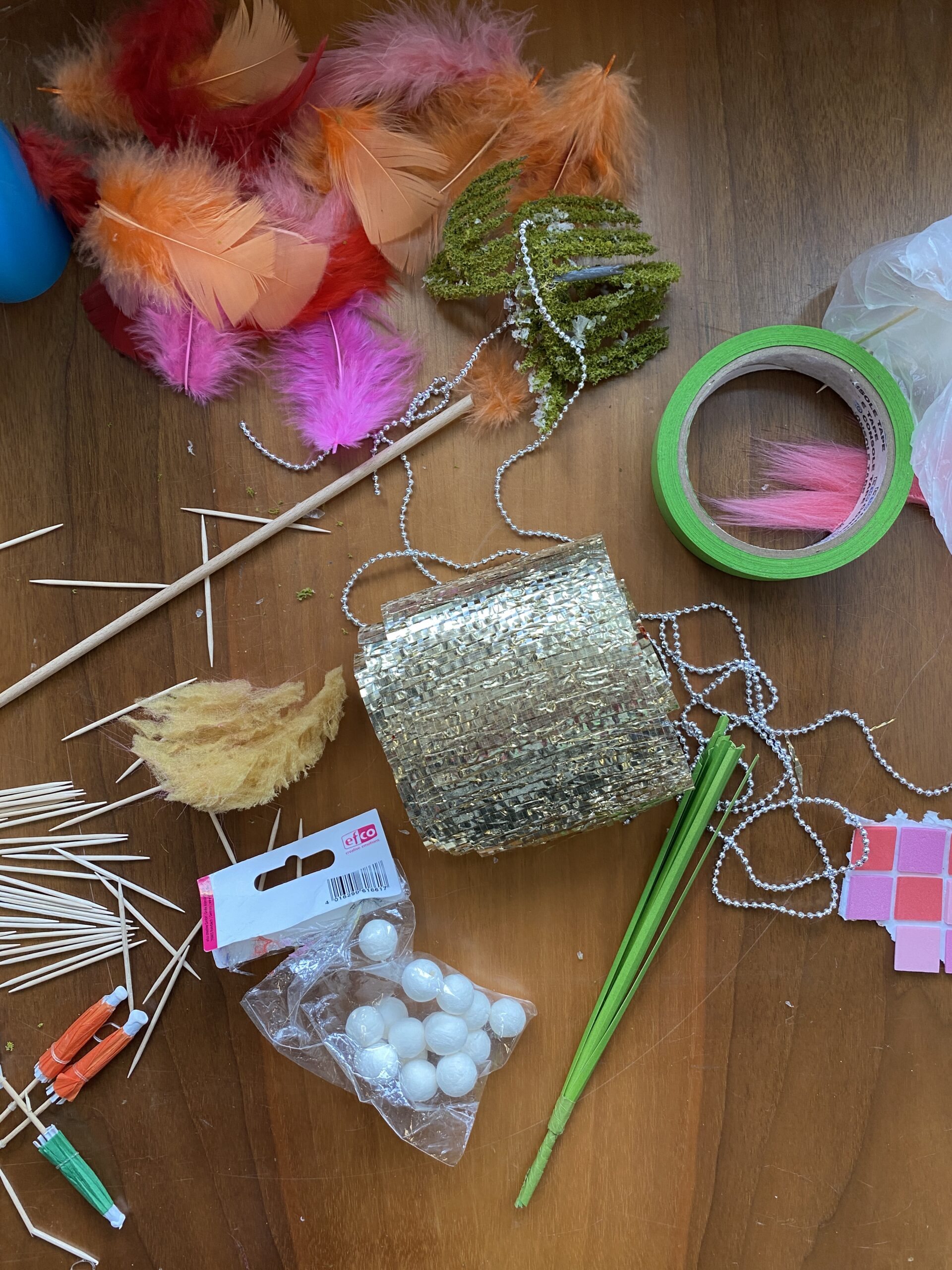
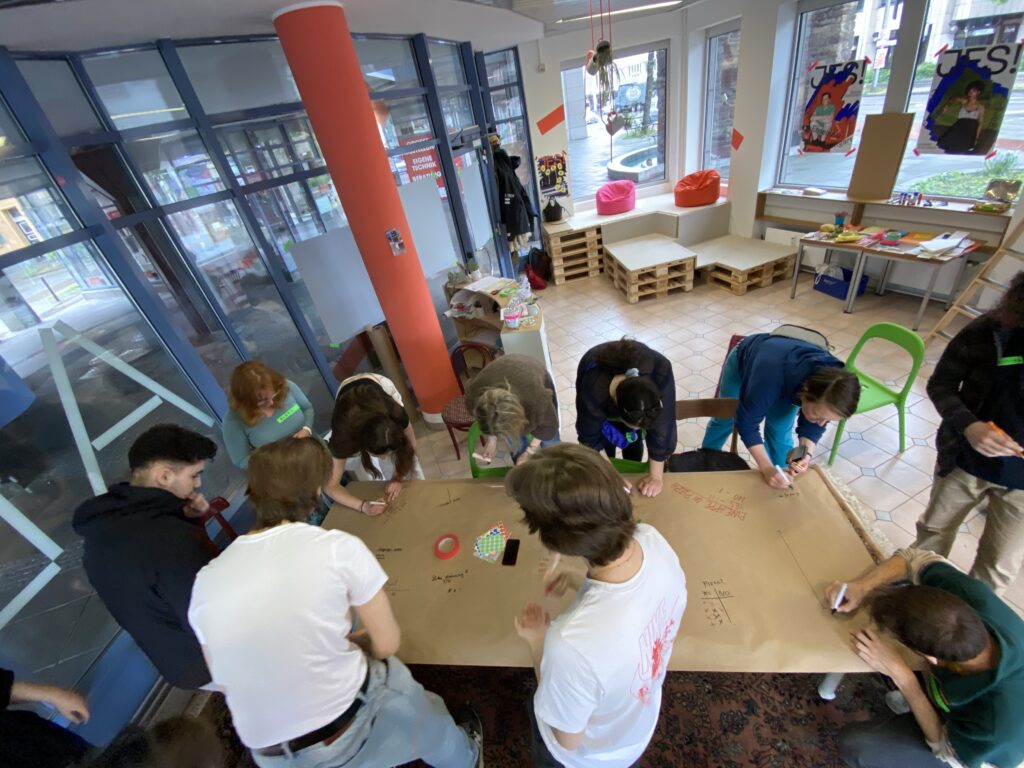
This old building is the new cultural hub in Dale called Samvirket, a place for hanging, performances, concerts and art. During the festival 3Place will occupy the foyer of Samvirket, and inspired by the workshops we did in Stuttgart in May, the teens will choose their avatar, and transform and build their dream of Samvirket, what they miss in Dale, their favorite spots, how they like to spend their time, and what’s important for them to feel at home. Follow along at our instagram and Facebook: @3Place.eu.
-
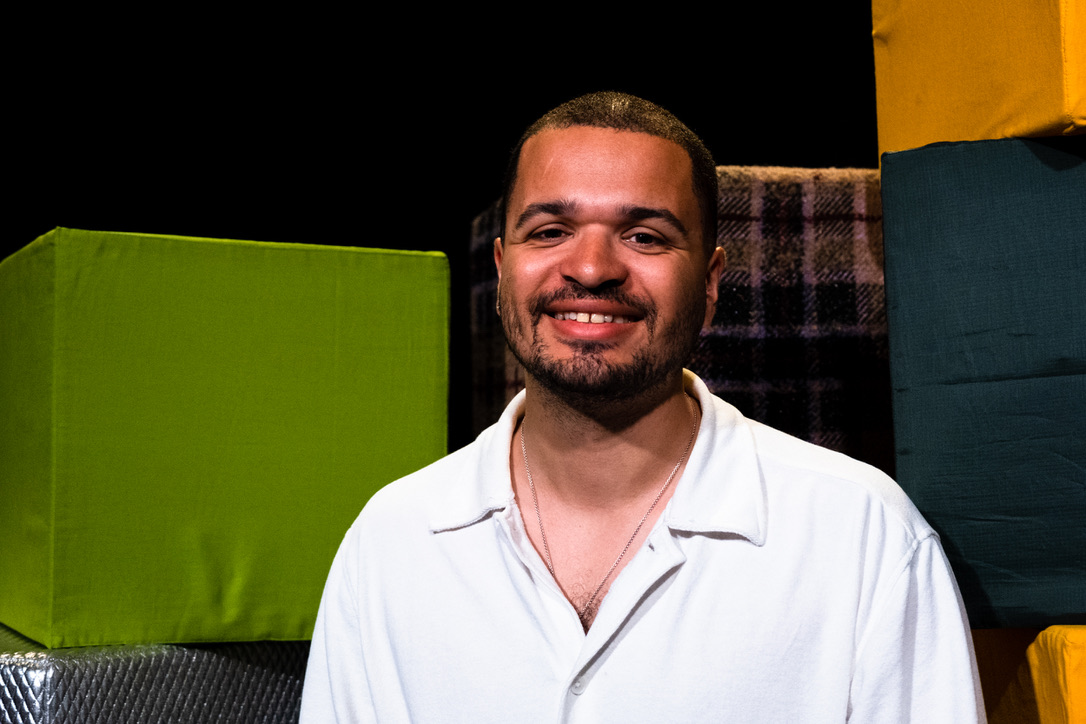
Julian Karenga: – Theater has made me freer
When Matilde Landlie (15) from Bergen had an internship at Kloden theater this spring, she interviewed director and playwright Julian Karenga (28). t the moment he is at Kloden teater with the performance “Veien sitt ansikt”. Read about how Karenga deals with writing blocks, what motivates him and what tips he has for young people who want to write more.
Text and interview: Mathilde Landlie
I have been on a week work experience at Kloden theatre, and have taken part in their new EU project, Performing arts as the Third place for the young audience. The third place project is supported by Kreativt Europa. It will last for three years, and the Norwegian organizations involved are Scenekunstbruket and Kloden teater.
In the project, they will investigate how theater can become a place for young people, a place where you feel at home and see yourself represented. “A third place” means the place outside the home (first place) and school/work (second place). It is the place you yourself choose to go to or be in, and which you like to be. It can be both together with others or somewhere you are alone.
With this project in mind, I interviewed director and playwright Julian Karenga. He is a trained actor, but works both behind and in front of the curtain. Julian has had two productions of his own, Demir (2021) and Snøbrun (2021), and is currently working on a new project: Veien sitt ansikt (The road’s face).
What is your third place?
– Good question. The idea of what a third place is corresponds to what writing is to me. The solution if I need to think, or have a bad day, is to write. My third place is probably in writing.
Would you say that theater and writing have been a big part of your life growing up?
– Yes, I will. I went to Steinerskolen (Waldorf school) when I was growing up. And at times in my life when I was trying to find what I wanted in life, I often came back to that moment when I did a school play in the seventh grade, then I felt safe. I felt an absolutely incredible freedom on stage.
Have you experienced writing blocks, and what do you do when it happens?
– I’ll move and maybe go for a walk. It helps a lot to change the environment. Or I try to lower the threshold for writing. If I just sit at the PC and write, it can quickly seem a bit impossible. So then I’d rather sit in the living room with my mobile phone or notebooks. I have many notebooks, and often change which one I use. If that doesn’t work either, I set a timer for 5-10 minutes, and sit down at the PC and don’t let my fingers leave the keyboard during that time. This is how I force myself to think less critically, and hopefully work more intuitively.
What about young people who want to work in theatre?
– It is important to see a lot of theatre, to keep up-to-date on what is happening in the theater and to talk to people about what you have seen – whether they are performances that you like or not. The question should always be why was something good/bad? The answer to this – whatever it may be – will always be the most interesting.
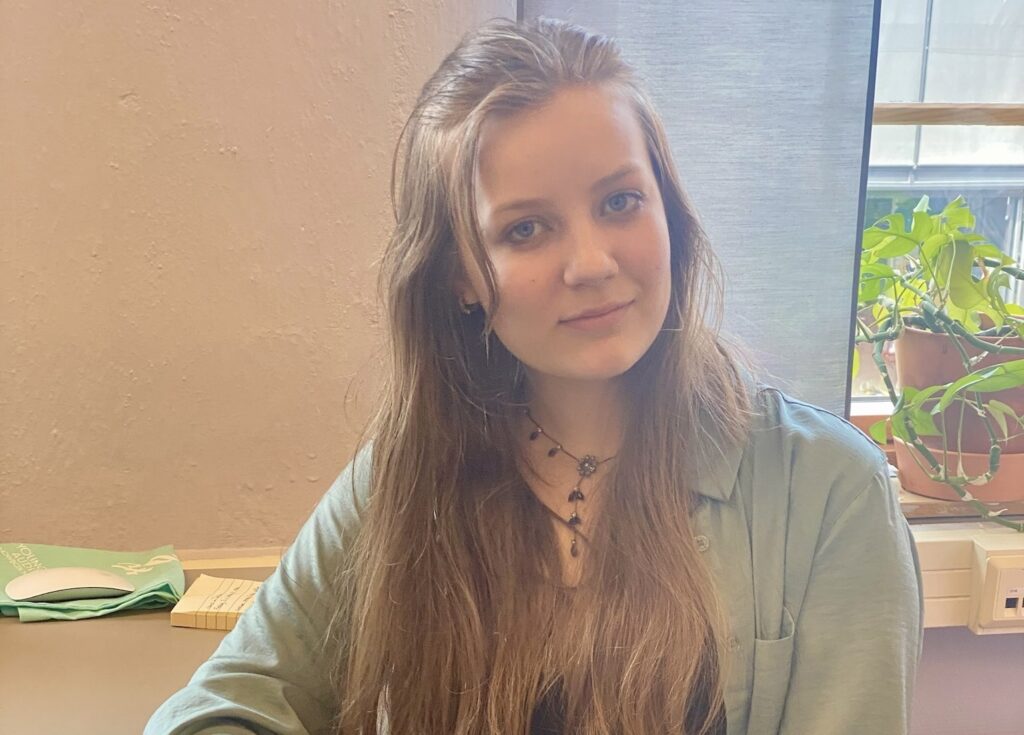
Mathilde Landlie has had a working week at Kloden theatre, and interviewed director and playwright Julian Karenga. You should keep your eyes open, and look into things like writing courses and talent programs. You can also sign up for Den Unge Scene or Ung Kultur Møtes. The more you get into all this, the more you get a taste of different environments. I think that for far too many actors and young people, theater can seem like a closed box that is difficult to enter.
What will you as a theater professional do to open this box and make it more accessible?
– In order to reach young people, I try to answer why the theater seemed inaccessible to me when I was young myself. The theater may seem like it belongs to the upper middle class, but I want to reach out to everyone. Able to break this barrier between the classes. To remember what it was like as a youth, I talk to my teenage self often, on an almost unconscious level. I want to dispel the thoughts and stereotypes that theater is full of prestige and vanity, and hope that I can make theater more accessible. I also address topics that I feel are under-communicated. I often write about taboos and other things that are not talked about as much. Because that’s what I think is needed more on stage.
Do you feel your productions can be personal and give too much away about yourself?
– Both yes and no. It gets a bit personal as I take my own life as a starting point; events or environments and experiences I have had. I don’t feel that it is giving away, but I am constantly working in a process where I try to direct the focus to the right place. I can experience that if you talk a lot about where the material comes from, and that it is based on true stories, then it takes the focus away from the art.
Finally, do you have any tips for young people who want to write more?
– It is important to write to yourself. Just writing in a diary is good, and it is important to keep the valuable freedom that comes from writing to yourself. Writing is a lot of practice, you have to write a lot to get good. You have to put in the effort! Also remember that writing is like a life companion. You will always have the writing.
You can see “Veien sitt ansikt” during Oslo Culture Night on Friday 15 September at 19:00, and Saturday 16 September at 19:00.