-
Digital Workshop #4: Imagining the theatre as a third place
Focus and rationale
One of the goals of Scenekunstbruket’s workshops is to carry out international research on the theatre house as a physical space and place. In this workshop, we chose to focus on the Third Place – Physical theme, which was particularly relevant at the time, as Kloden theatre was in the middle of its architectural planning phase. This made it possible to discuss and explore concrete adaptations. Both the Artistic Director and the Producer of Kloden participated in the workshop.
Building on our previous digital workshop (#2), we wanted this session to take the work a step further by imagining a complete theatre house. As the structure of the last workshop had worked well — both in terms of technical platforms and the decision to focus on one main task — we chose to build on the same format for this workshop.
Structure and task
A large group was attending this digital workshop, and a mix of familiar and new faces, both young and adultsAfter a brief ice-breaking session, participants were divided into six departments, each responsible for a different aspect of creating a fictional theatre house:
- Architecture
- Brand development
- Interior design
- Artistic programming
- Social events
- Ethics, inclusion and social responsibility
Each group developed proposals for their area, resulting in a collectively imagined theatre house. The task was intentionally open-ended, allowing humour, ambition and critique to coexist. This enabled participants to articulate expectations, needs and values connected to cultural spaces. The group engaged into the tasks, and with a lot of laughter and afterthought, we found several good tips in how to think at our institutions’ programming.
Outcomes
The workshop provided insight into how young people from different countries imagine welcoming, inclusive cultural institutions. It also demonstrated how digital formats can support complex collaborative thinking, even with larger and more diverse groups.
One of the findings was that the digital workshops function well as a way to stay in contact with young people who naturally move on with their lives in different cities, at universities, and in other contexts. It was encouraging to see that several participants experience the 3Place project itself as a third place — a space where they meet both familiar and new national and international peers they are not otherwise in contact with outside the project framework.
-
#3 digital workshop: Non-rational Inspiration and Spontaneous Creation
he workshop gathered 18 young people and professionals from Norway, Germany and the Czech Republic and was led by theatre educators Jana Nechvátalová and Klára Fidlerová.
The 3rd Digital workshop provided mainly 3 opportunities:
- to reconnect the young as well as adult participants who have already met at Camp Involve
- to make the first connection with new young participants from Norway and Germany
- to create
Focus and approach
The workshop focused on artistic creation driven by non-rational sources such as intuition, chance and spontaneity. It also functioned as a reconnection point after the summer break, while welcoming new young participants into the 3Place network.
Rather than working towards a polished outcome, the workshop emphasised process over result, encouraging participants to trust impulses and experiment without evaluation.
Hopefully, it was the first successful step to find our 3place in artistic creation.
Methods and tasks
Participants worked through a sequence of short creative exercises:
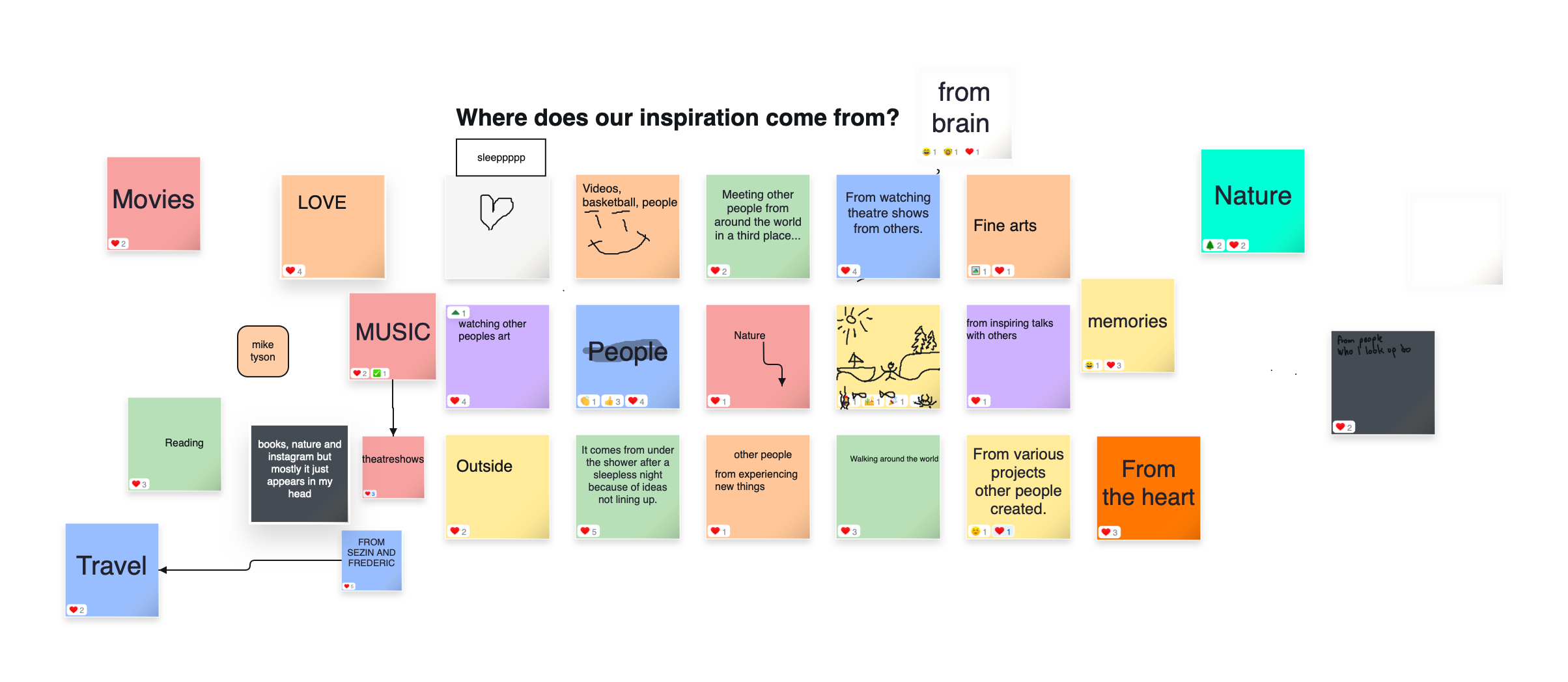
- Brainstorming inspiration: mapping personal sources of inspiration on a shared mural board
- Automatic writing: five minutes of uninterrupted writing based on musical stimuli
- Dadaist poetry: assembling poems from selected words and sentences to create unexpected meanings
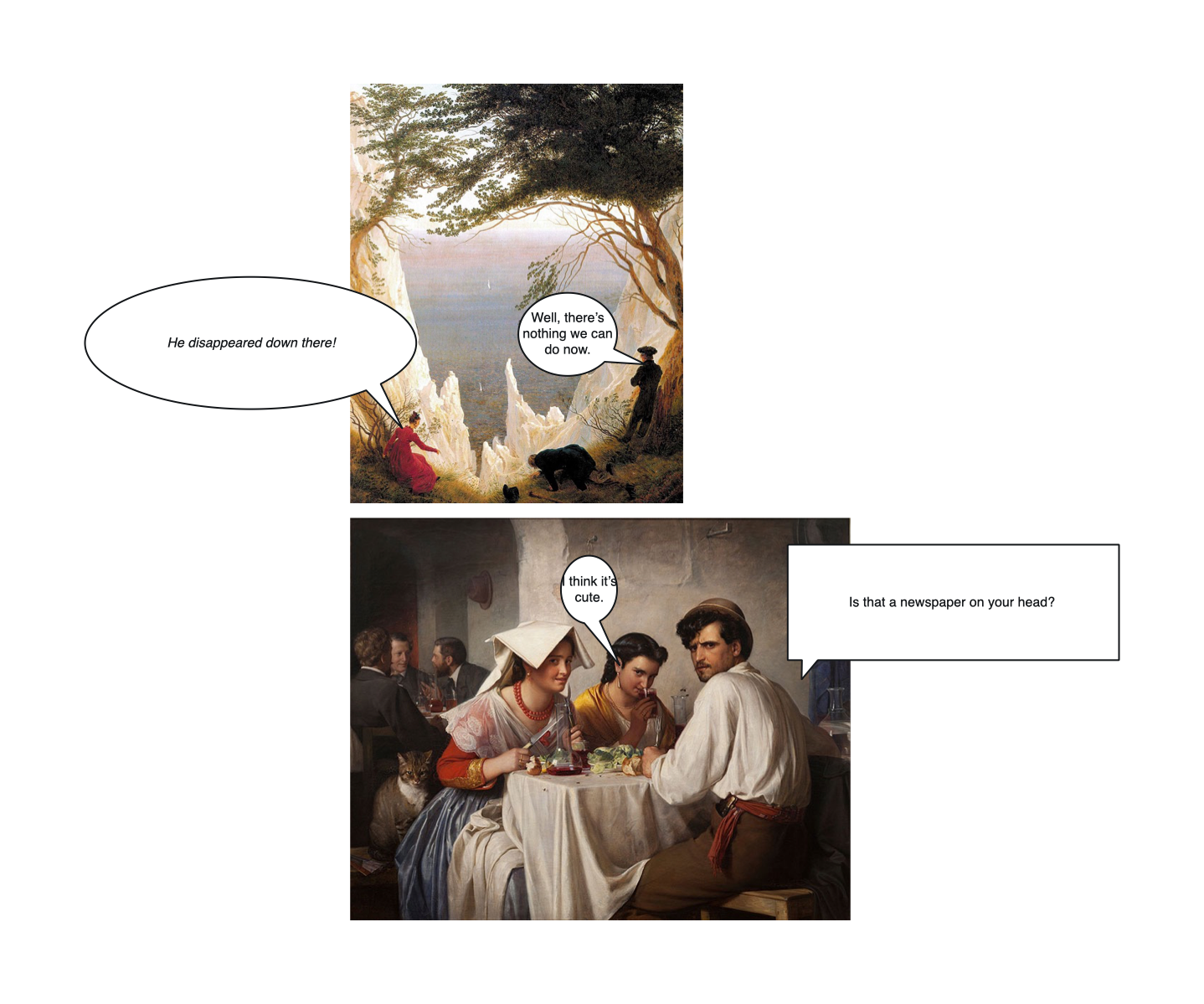
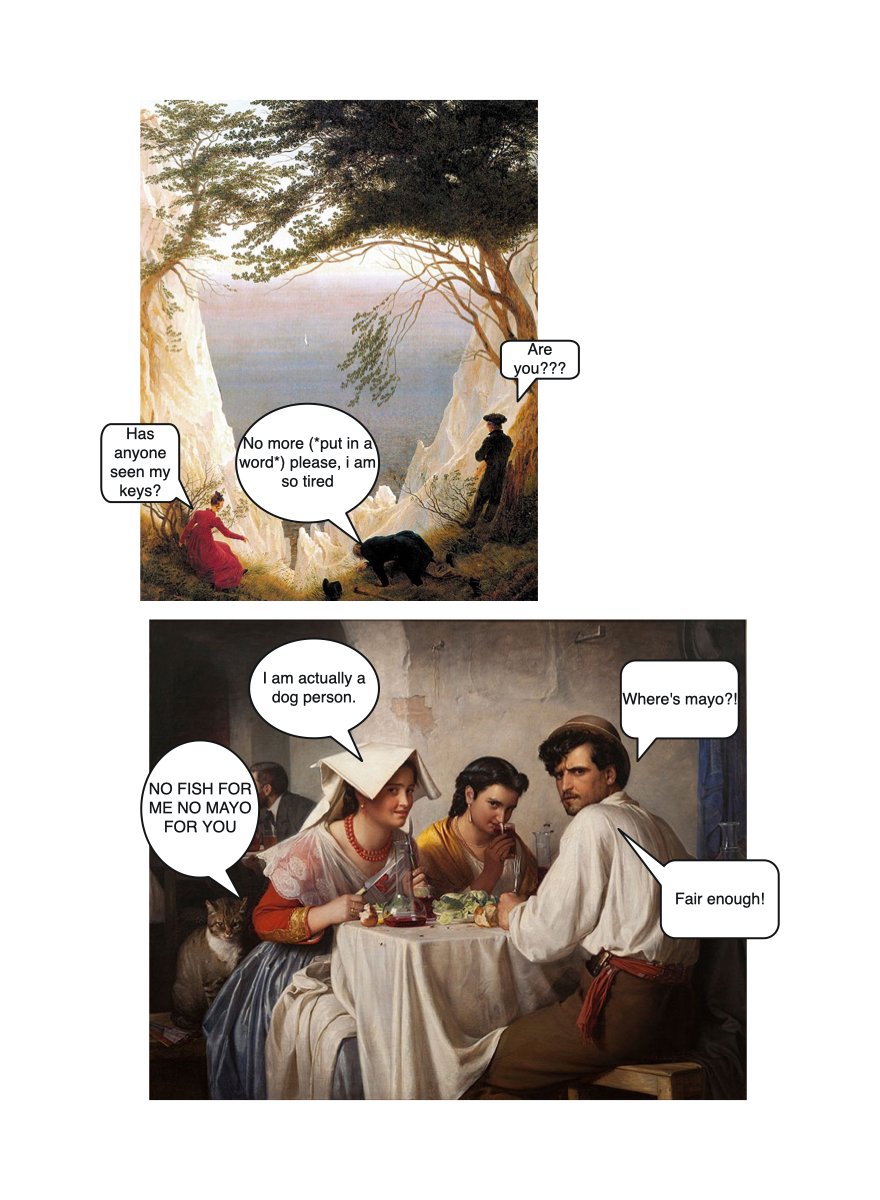
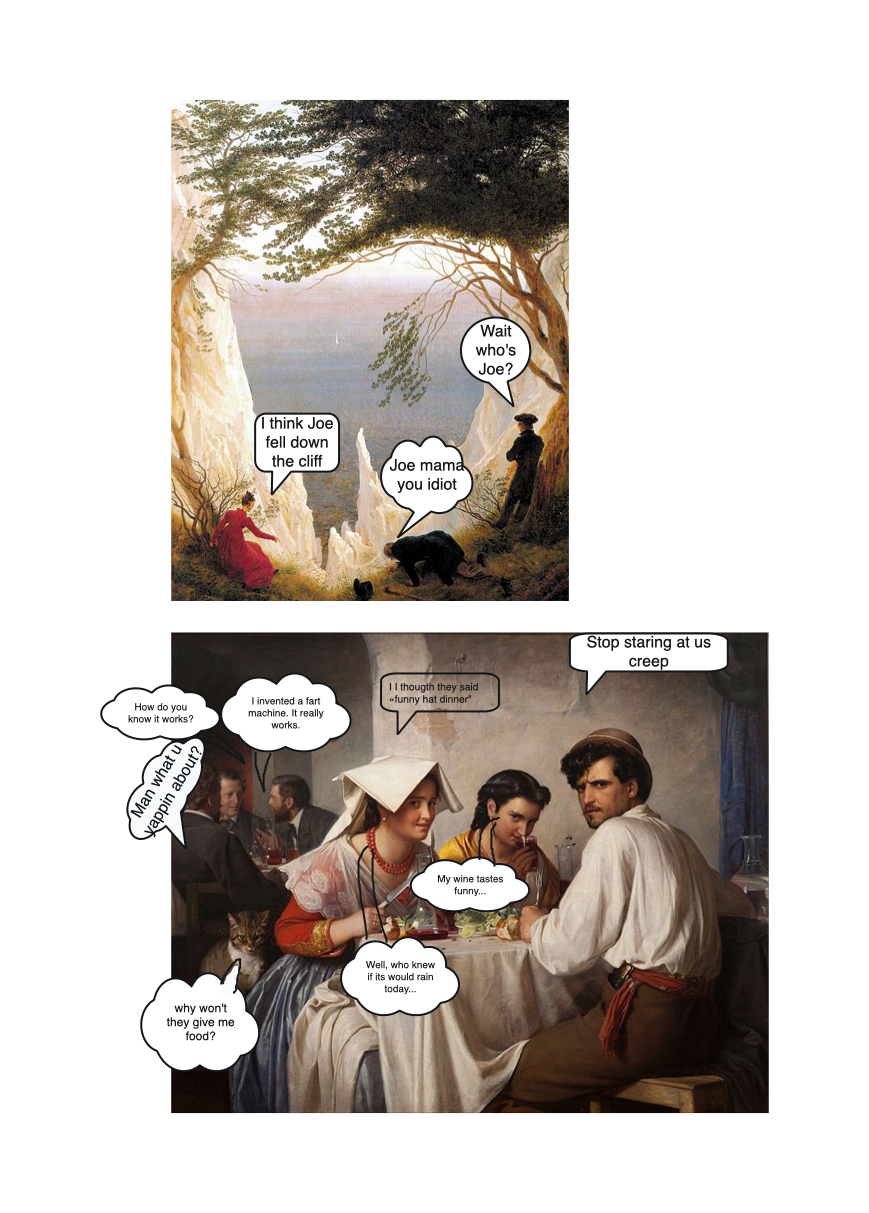
- Classical comics: collaboratively adding speech bubbles to classical paintings without verbal communication
- Fictional film synopsis: playfully developing stories through associative thinking
Each task was designed to reduce self-censorship and support collective play in a digital setting.
Outcomes
Despite being fully online, the workshop created a strong sense of connection and shared experience. Participants reported feeling free to experiment and engage creatively with others, including peers they had not met before. The workshop demonstrated that artistic play and group cohesion can be fostered digitally when tasks are simple, imaginative and clearly framed.




-
Video: Live stream
If you’re not in Oslo during Showbox, you can still listen to the talk at Showbox Performing Arts Festival for a Young Audience with the partners.
We have invited artists and institutions with different approaches to performing arts, the young audience and urban development.
- What can theatres offer young people, and what does this interaction do to their identity as art producers?
- What is the right balance between making a place to hang out, and a place for programmed activities and art production? Or, what is a good balance between audience development and art development?
- What kind of methods do artists use to involve young people who don’t see performing arts as a place for them?
- What role can performing arts play in young people’s lives; do we offer experiences, participation, social community, entertainment or education?
Participants:
Speaker: Ine Therese Berg (NTNU)
Junges Ensemble Stuttgart
Divadlo DRAK
Scenekunstbruket
Vega scene / Vega ung by Katinka Rydin
Kloden theatre by Ådne Sekkelsten
Østfold Internasjonale teater by Thomas Østgaard
Landing by Venke Sortland
Panta Rei Danseteater by Anne Ekenes