-
Fieldwork: Networking get-together „Treffen mit Aussicht!“
Report networking get-together „Treffen mit Aussicht!“ (meeting with a bright view) meets and treats!
Report: Zelda (14) and Marie (13)
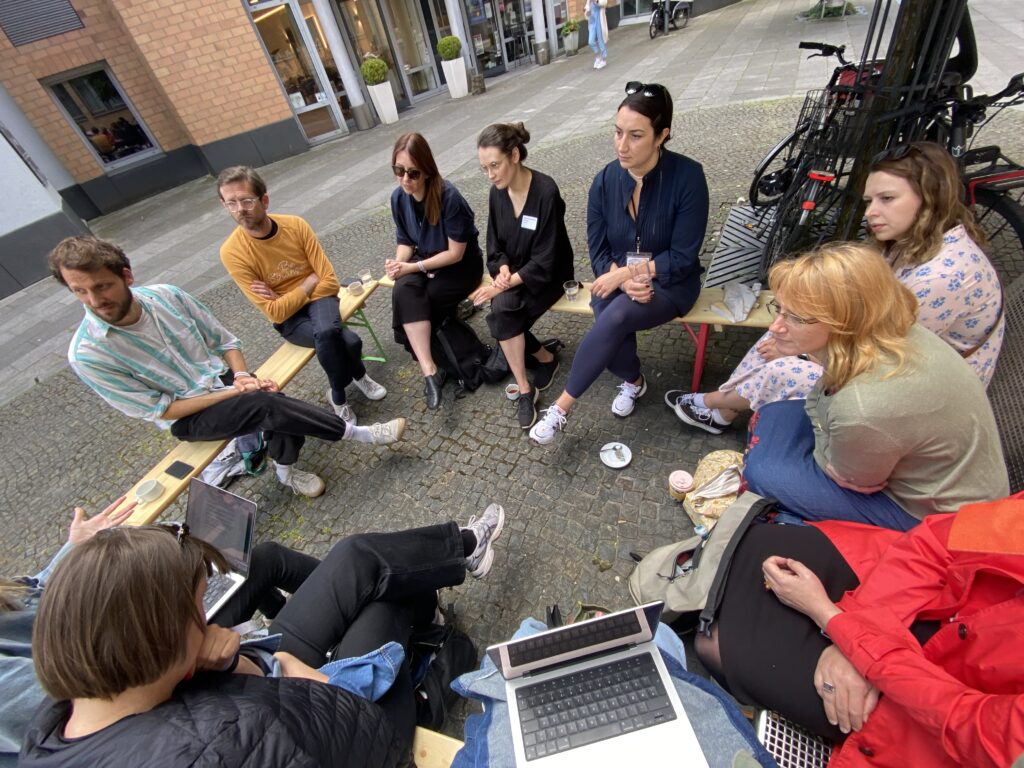
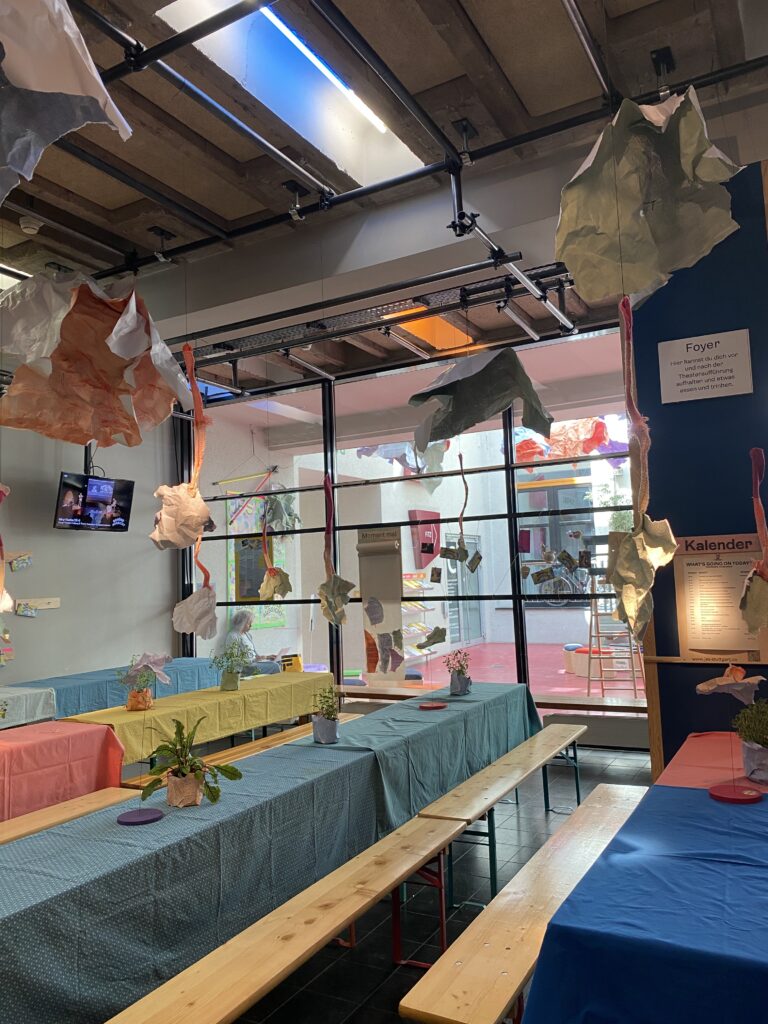
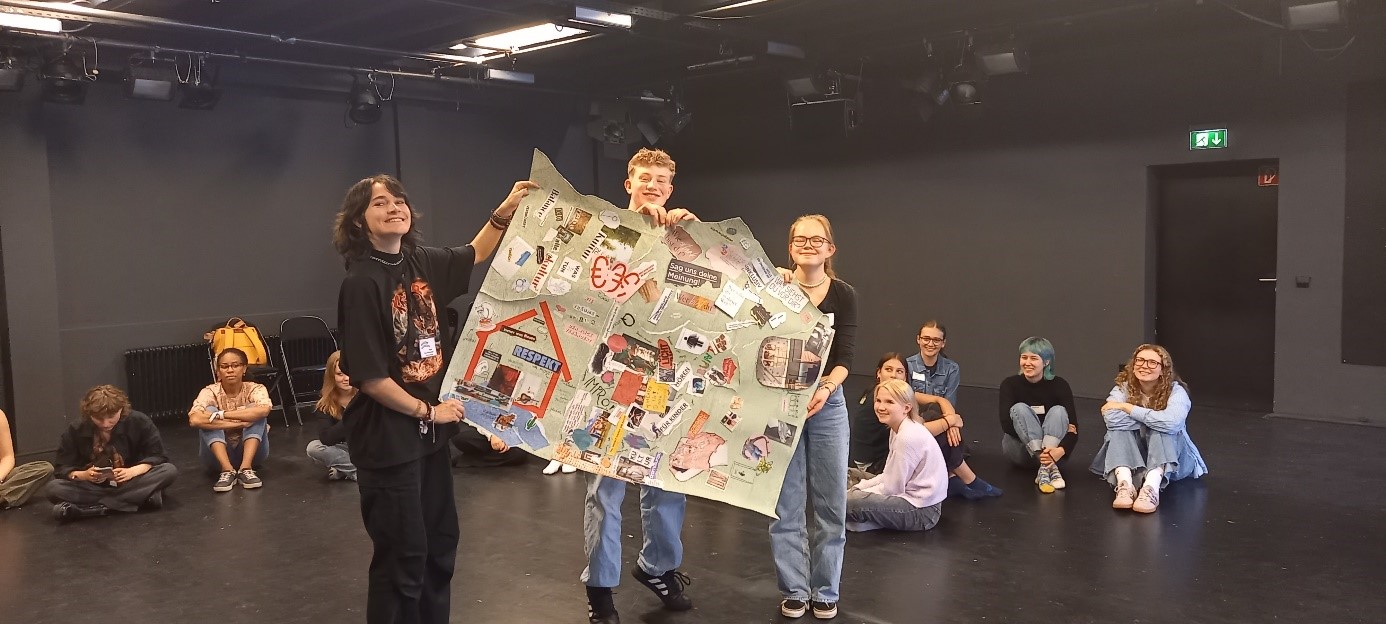
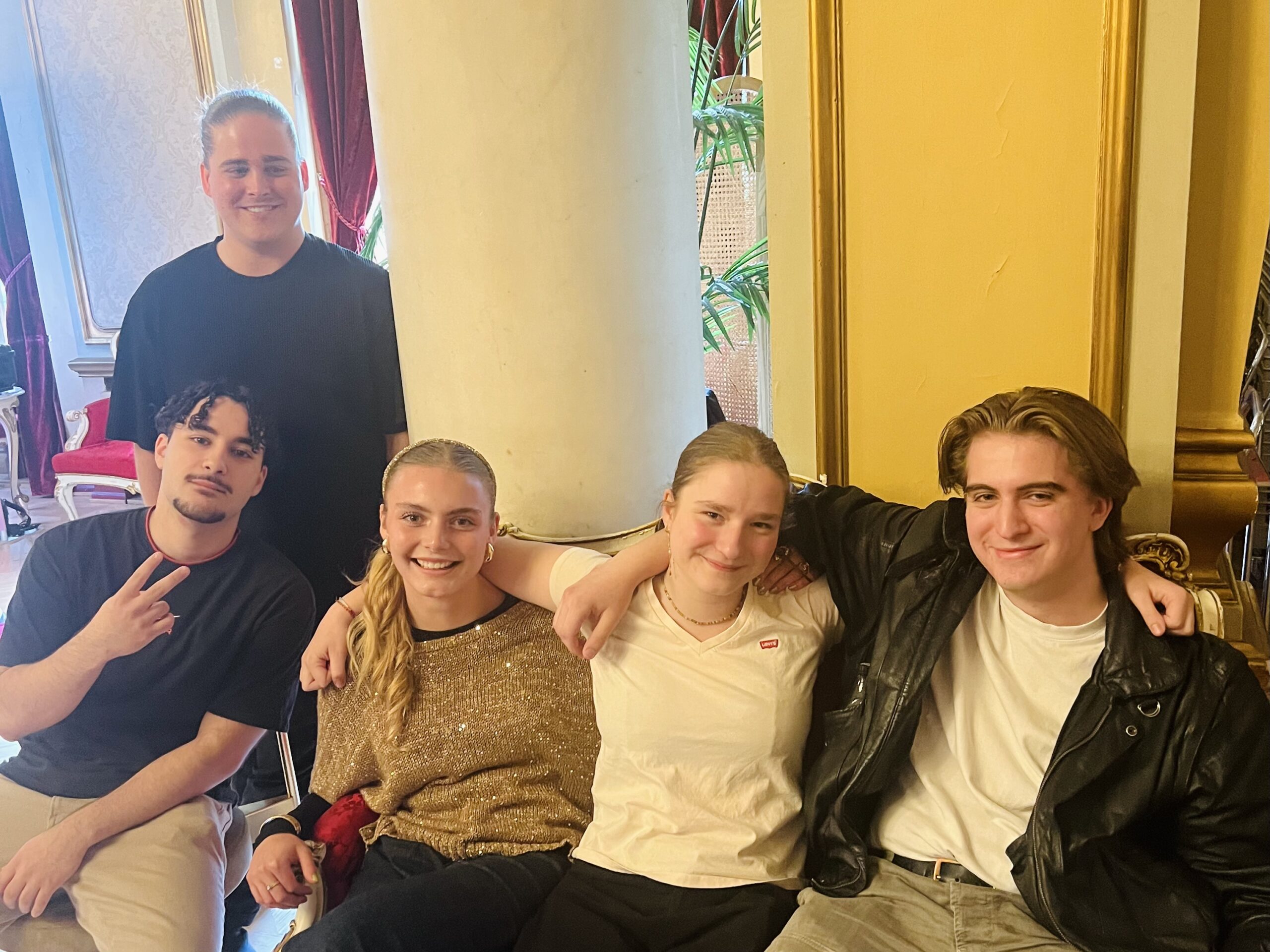
On the 14th of June 2024, in one of the rooms of the JES we organized a meeting of multiple youth theatre clubs and advisory board of theatres from multiple places in Baden-Württemberg. This get together was initiated to give young people the opportunity to share their experiences being a part of their theatres, and how to give teenagers and kids a bigger voice and rights to co-decide in their own theatre.
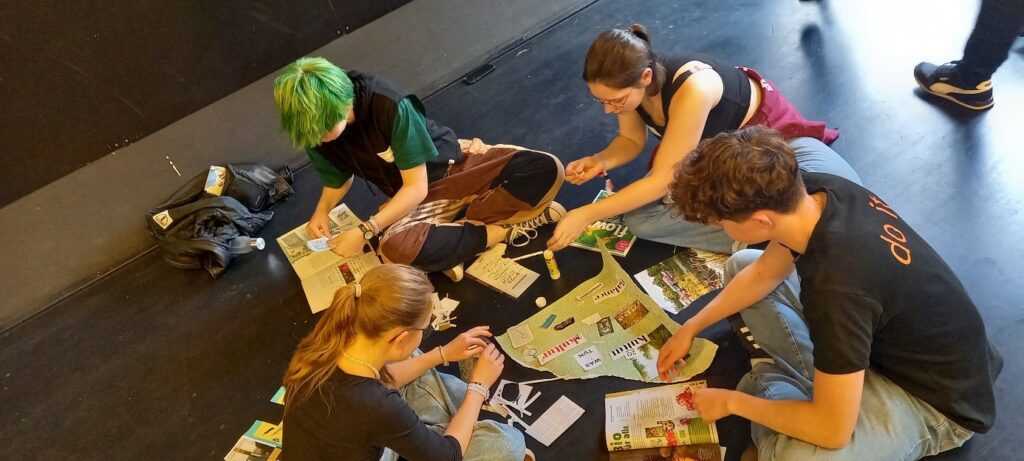
When all the representatives arrived in the JES, we first did a warmup where everyone introduced themselves and their theatre and then played some games like the “morph circle” and other theatre-club type games to ease the tension and get to know each other a bit.
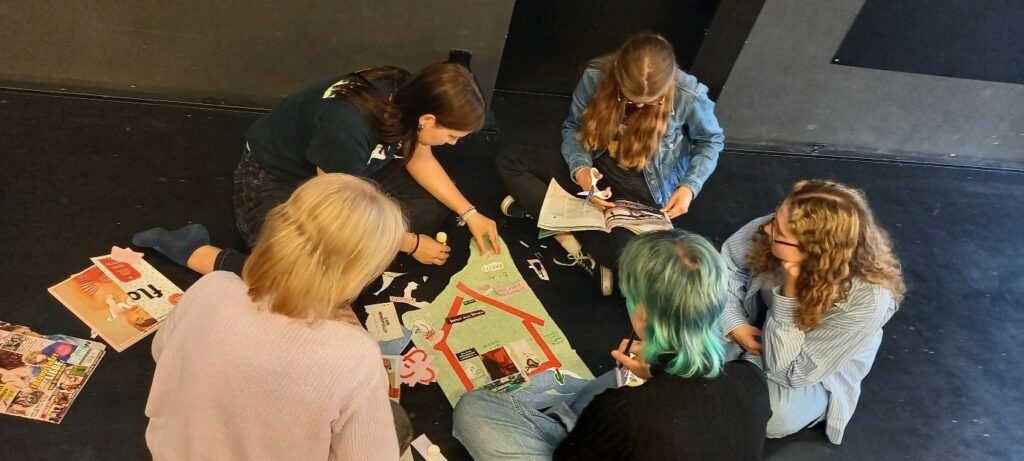
After that we got to the main point of the meetup, where we gathered around in separate places of the room to discuss following questions:
– How can we have a say in our theatre?
– What annoys us at our theatre/ What really has to change now?
– What goes well? What are we content with?
– How do we work together in our theatre?
– What things do we like to do in our youth advisory board?
– and a free spot where you could talk about whatever you wanted
We rotated around the room to make sure everyone had a chance to share their thoughts on every question. To recollect our results, we all decided to make a big collage of what we think our utopian theatre would be.
Our goal was to share our skills and experience with other teenagers, and that everyone could walk out with something learnt they want to get through in their own theatre. We as the JES Philosophers think this was archived well, as we learned quite something ourselves.
We had even more options to continue our discussions as the networking-guests as they stayed in Stuttgart for a night and watched three pieces with us after our meeting and the next day. We had multiple opportunities to share our views in small groups and while eating dinner. This was incredibly inspiring as none of us usually have a lot of contact with other advisory boards.
-
Fieldwork: Kitchen table at Heddadagene
Unge Stemmer, Scenekunstbruket’s youth critics platform, hosted an informal round-table conversation led entirely by young people. The participants set the agenda and guided the discussion themselves.
Throughout the spring and during The Hedda Days, a youth editorial team attended performances and published reviews and reflections on Unge Stemmer. In this conversation, they shared their perspectives on what they had seen and experienced, and reflected on how performing arts are perceived by young audiences today.
Unge Stemmer is an online platform where young people write about performing arts. Established by Scenekunstbruketin 2012, the initiative aims to ensure that young people’s voices are included in the public discourse on art and culture. Over the years, youth critics have covered festivals and events such as Showbox, Marked for musikk, and Teaterfestivalen i Fjaler. In 2025, a youth editorial team also followed The Hedda Days.
Within the framework of 3Place, Unge Stemmer serves as a concrete example of how young people can actively shape artistic conversations and contribute to more inclusive, participatory cultural spaces.
-
Festival visit: Meet us at Schöne Aussicht
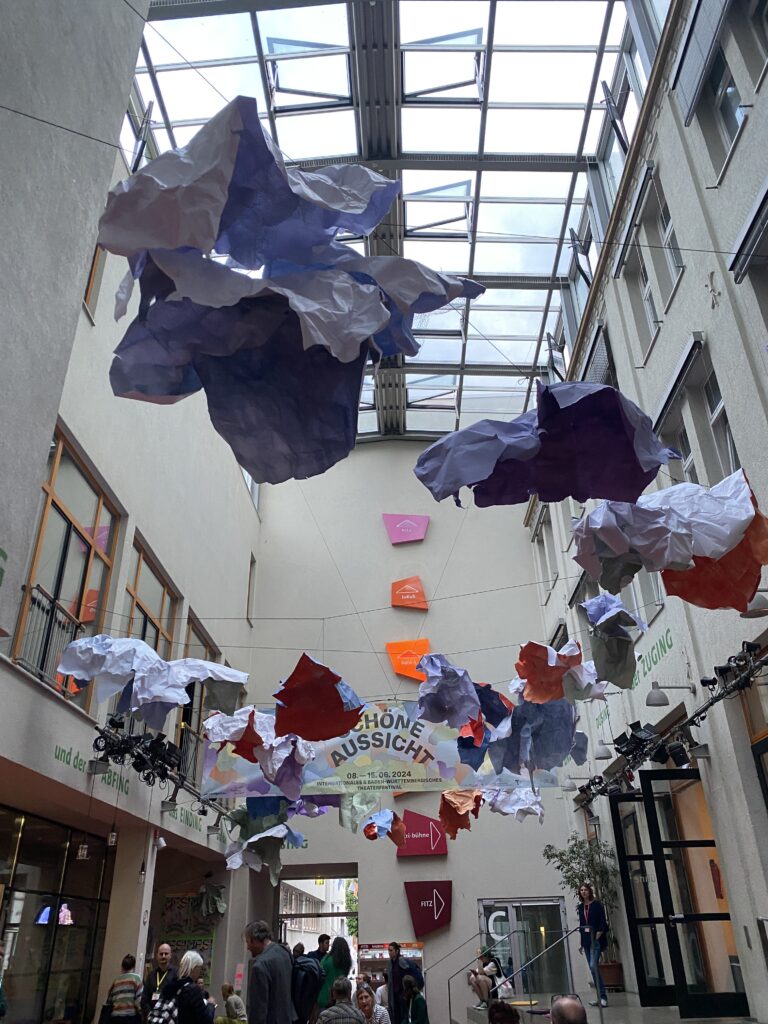
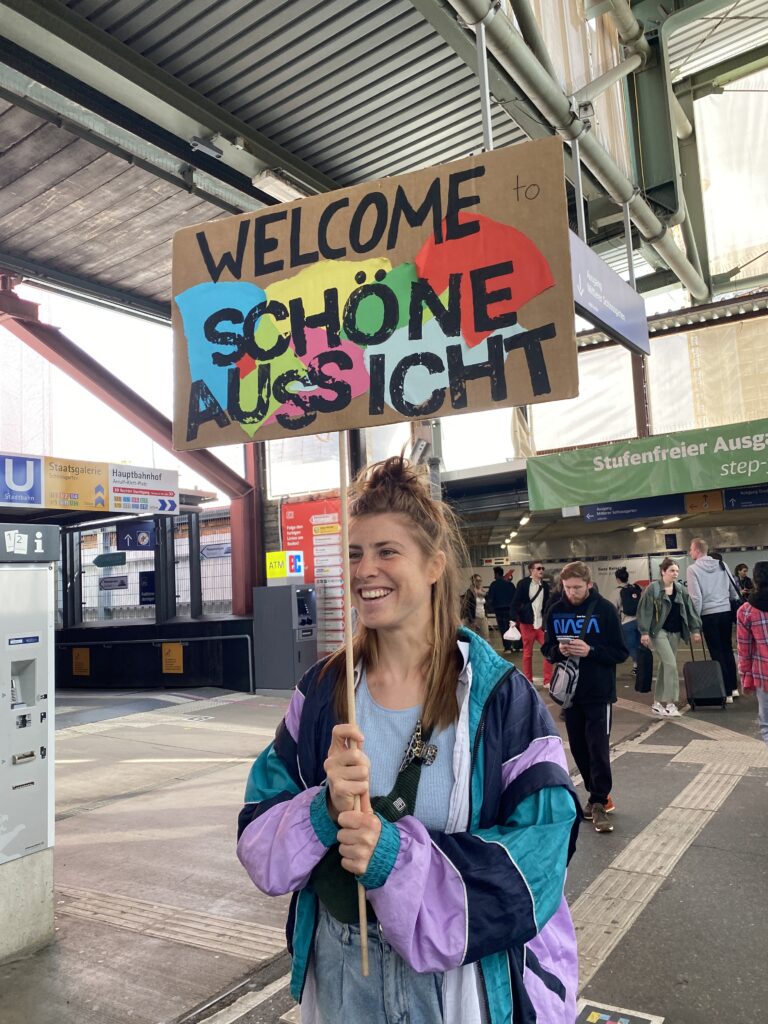
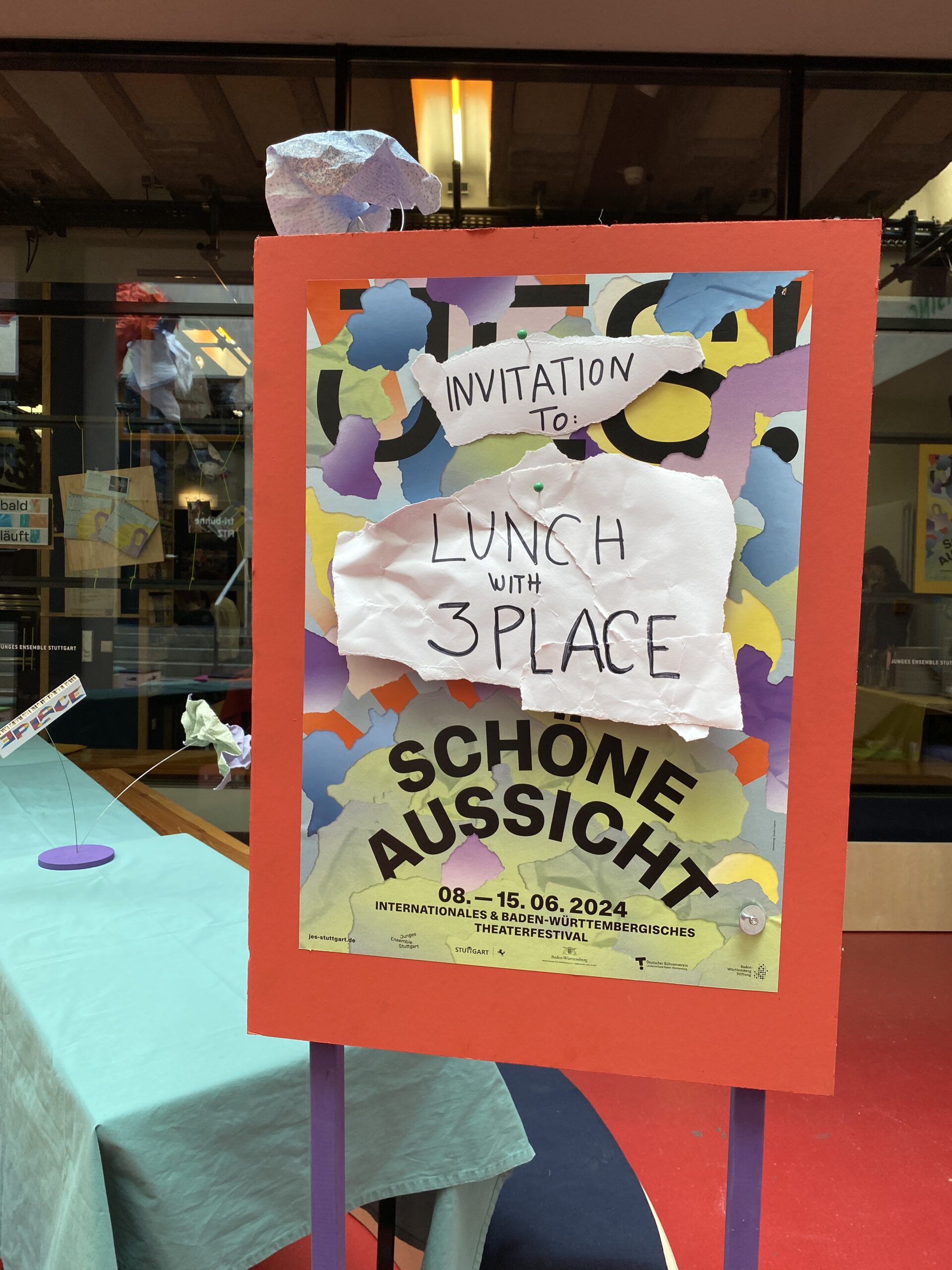
Every other year our German partner JES Stuttgart hosts their wonderful festival; Schöne Aussicht. With a blend of international and local productions, the festival attracts several international delegates.
All the partners in the project is here, and during the week we will see shows, participate in talks and meetings.
The team at JES told us this about the curation process for their international program:
One and a half years ago, the curation process for the international guest performance programmebegan with an open call. We asked: HOW DO YOU HANDLE UNCERTAINTY? A question that we are constantly confronted with in a rapidly and unpredictably evolving world and that we hope will inspire and empower us – not only in our artistic work, but also in dealing with social, economic and political challenges. We therefore set out in search of productions that deal with uncertainty in terms of content, form or working methods. Over 200 applications were submitted, which enabled us as the curatorial team to put together a diverse festival program of productions that we see as possible responses, reactions or attitudes towards uncertainty.
In the ten selected productions, we experience uncertainty in a first encounter, in emerging and breaking relationships, in worries about the future, in the finiteness of life. Sometimes it is about plugging a dripping leak in the ceiling, sometimes about not getting lost between truth and lies. Some ask how we can hold, support and carry each other. Others simply ask: what do YOU need?