-
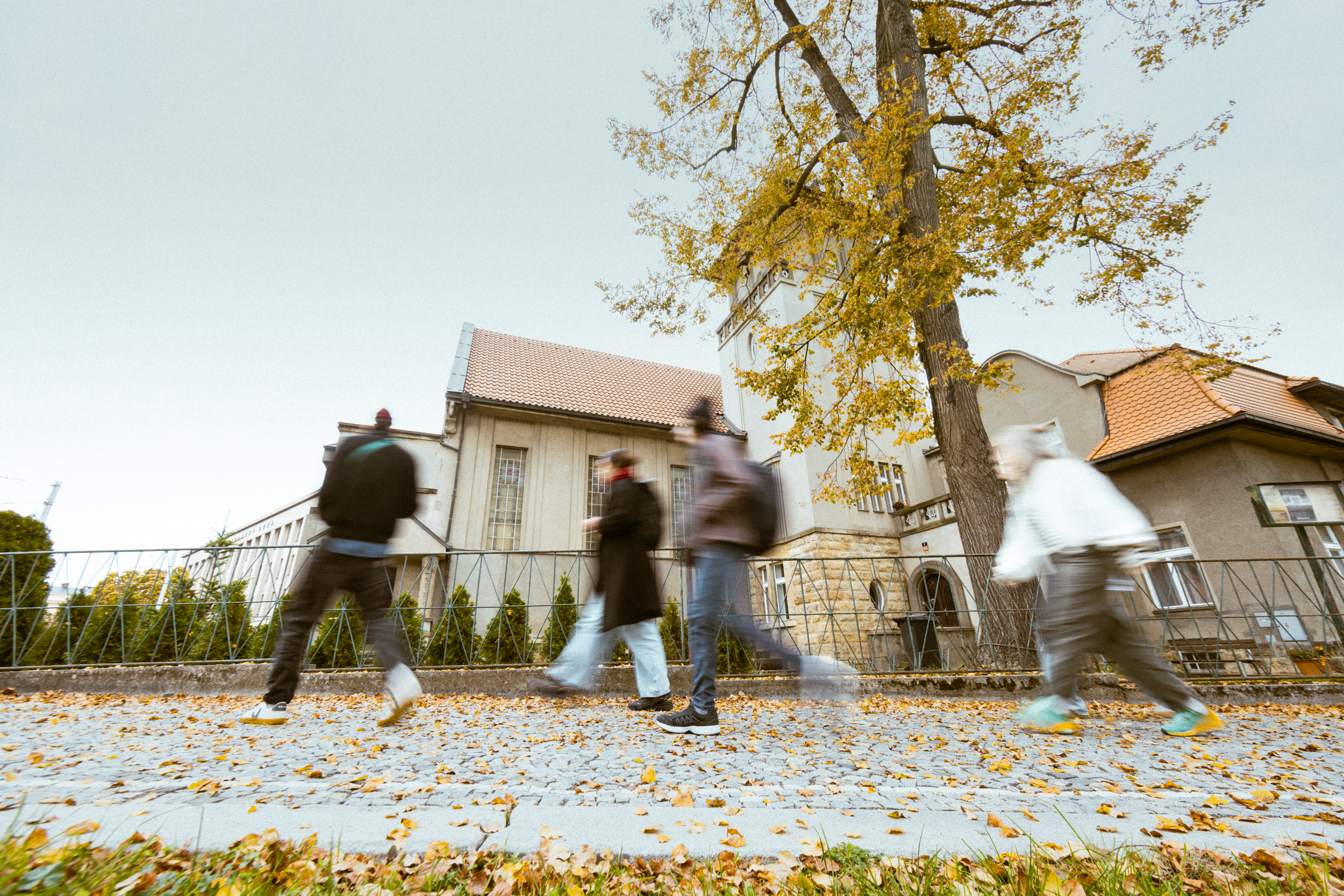
Fieldwork: Audiowalk “Hallo! Can you hear me?”: Extending Theatre into the City
The audiowalk Hallo! Can you hear me? was developed as an exploration of how theatre for young audiences can move beyond the theatre building and into the city itself. The project emerged from conversations with young people who were already closely connected to Drak Theatre and who expressed a desire to work with formats that felt more immediate, immersive and closely tied to their everyday surroundings.
The result was an original audiowalk authored and performed by teenagers, supported by a theatre educator, a professional dramaturg and the technical team at Drak Theatre. From the outset, the ambition was clear: the young participants were not invited to “fill in” an existing concept, but to develop both the story and the form themselves.
Theatre without performers — but not without presence
The audiowalk offers a para-theatrical experience. There are no live performers and no traditional stage. Instead, participants move alone through the city, guided by audio instructions and fragments of a dystopian narrative. Through headphones, they enter a story in which they themselves become the protagonist.
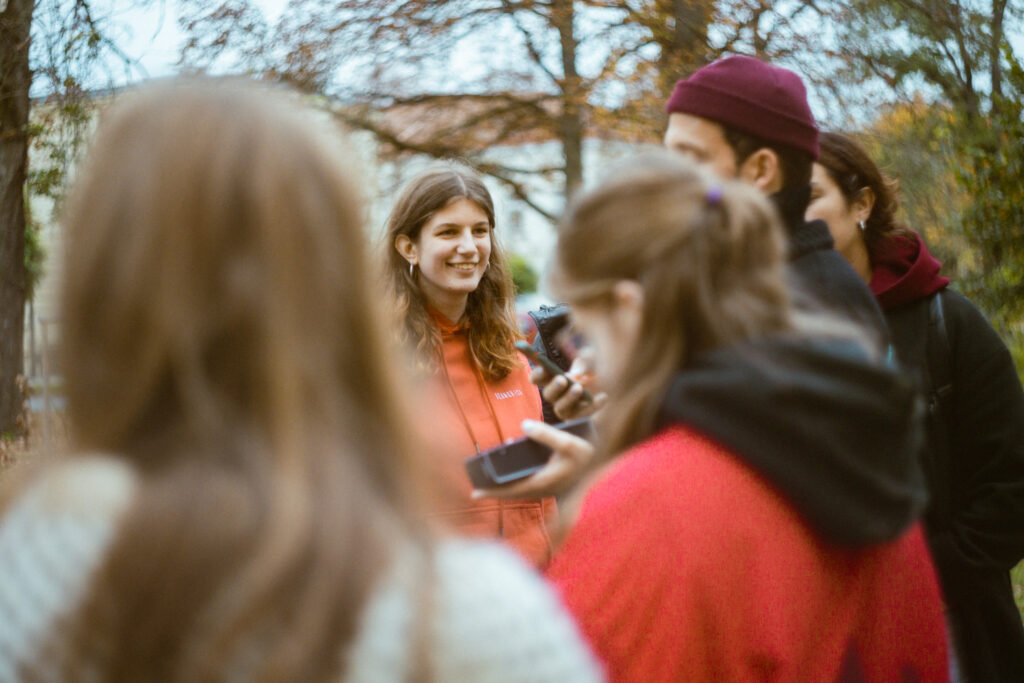
The walker is addressed directly by a mysterious teenage girl who asks for help. Together, they navigate urban spaces, solve tasks and uncover hidden stories connected to specific locations. The city becomes a stage, and everyday surroundings are transformed into sites of imagination, tension and choice.
This format allowed the young creators to work with atmosphere, pacing and intimacy in a way that differs fundamentally from stage performance. The absence of visible performers heightened the sense of proximity and responsibility: the experience only exists through the active participation of the walker.
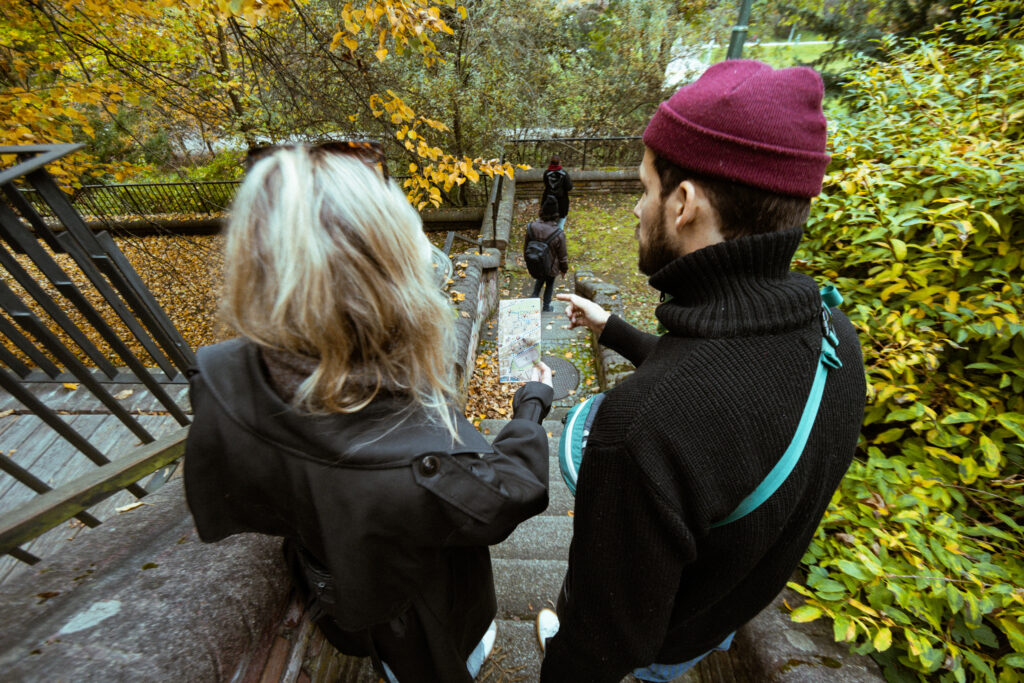
Young people as authors, performers and dramaturgs
One of the central research questions behind the audiowalk was how far youth authorship could be extended — not only to content, but also to form. The teenage participants developed the narrative structure, wrote the text, recorded the audio material and shaped the rhythm of the experience. Professional adults acted as facilitators and sparring partners rather than decision-makers.
This process revealed how strongly young people engage when they are trusted with full artistic responsibility. The dystopian story that emerged reflects teenage concerns about isolation, responsibility, communication and the fear of not being heard — themes that resonate both personally and socially.
At the same time, the project functioned as an introduction to dramaturgical thinking: how to guide an audience through space, how to build tension without visual cues, and how to balance instruction and freedom.
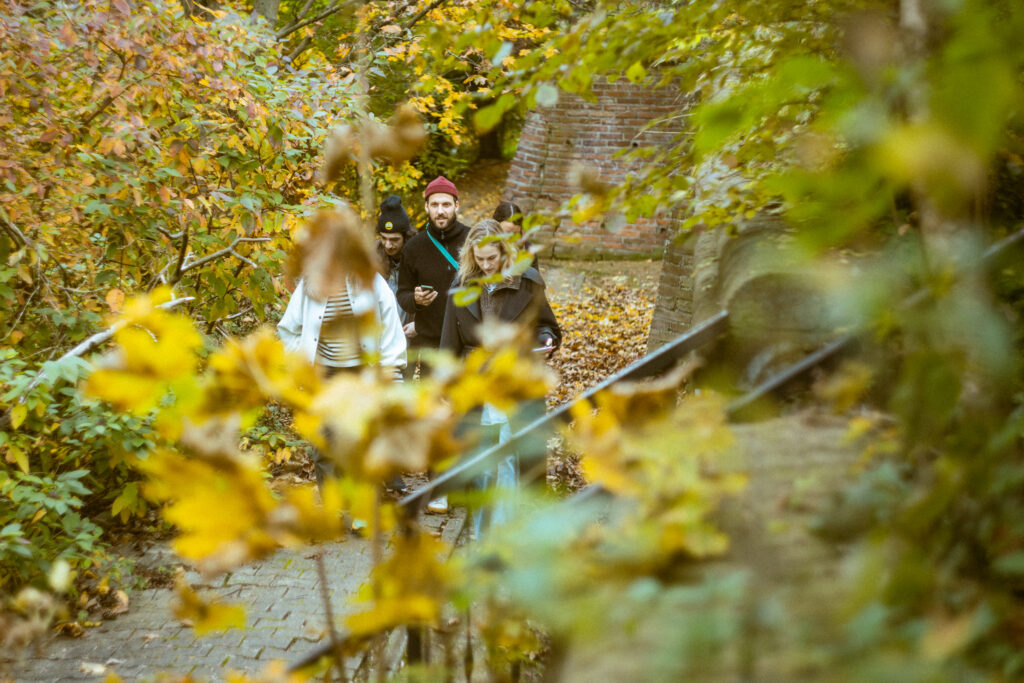
The city as a third place
By relocating the theatrical experience into public space, the audiowalk reframed the city as a potential third place. Participants encountered familiar streets, corners and paths through a new lens, discovering how storytelling can temporarily transform everyday environments into spaces of meaning, play and reflection.
The project also questioned who theatre is for and where it can take place. For many participants and audience members, Hallo! Can you hear me? offered a first encounter with theatre that did not require entering a cultural institution. This lowered the threshold for engagement and expanded the idea of where and how theatre for young audiences can exist.
International testing and multilingual exchange
The audiowalk was produced in both Czech and English. The English version was first tested with international participants during Camp Artistic in autumn 2024, where young people from the partner organisations experienced the walk and provided feedback. In this way, the audiowalk also became a shared reference point within the international 3Place collaboration.
Over an eleven-month period, the audiowalk was experienced by 57 participants. Feedback highlighted the strong sense of immersion, the emotional closeness created by the audio format, and the feeling of being personally addressed and involved.
What we learned
- Theatre for young audiences can successfully extend into urban space without losing artistic depth or emotional impact.
- Giving young people authorship over both narrative and form leads to strong engagement and relevance.
- Audio-based formats create intimacy and agency, positioning the audience as active participants rather than observers.
- The city can function as a third place when framed through artistic storytelling.
- Para-theatrical formats can serve as accessible entry points to theatre for audiences who might not otherwise engage with institutional spaces.
Hallo! Can you hear me? demonstrates how theatre can be reimagined as a mobile, participatory and youth-driven experience — one that listens closely to young voices and allows them to reshape both the story and the space in which it unfolds.
-
Fieldwork: Theatre as experience, question and choice
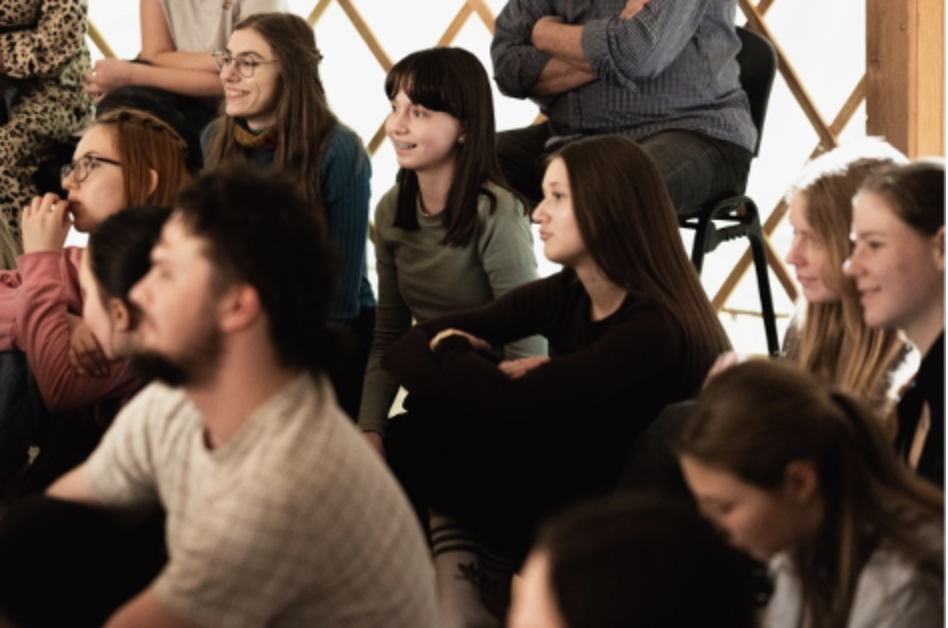
The Sophomore Project offers second-year high school students a structured pathway into theatre over the course of an entire school year. Through repeated theatre visits, workshops and discussions, students learn how to read, reflect on and respond to theatrical experiences.The programme emphasises dialogue, critical thinking and personal response rather than correct interpretation. Students gradually take ownership of their learning process, choosing how deeply and in what direction they want to engage.
The format has become a stable part of Drak Theatre’s educational work and continues to evolve through insights gained in the 3Place project.
What we learned
- Repeated encounters build critical theatre literacy over time.
- Reflection and dialogue are essential to meaningful engagement.
- Flexibility within a clear structure supports ownership.
- Theatre becomes a third place when participation is voluntary and meaningful.
-
Digital Workshop #9: Merging digital and physical experience
New approach: messaging platforms as workshop space
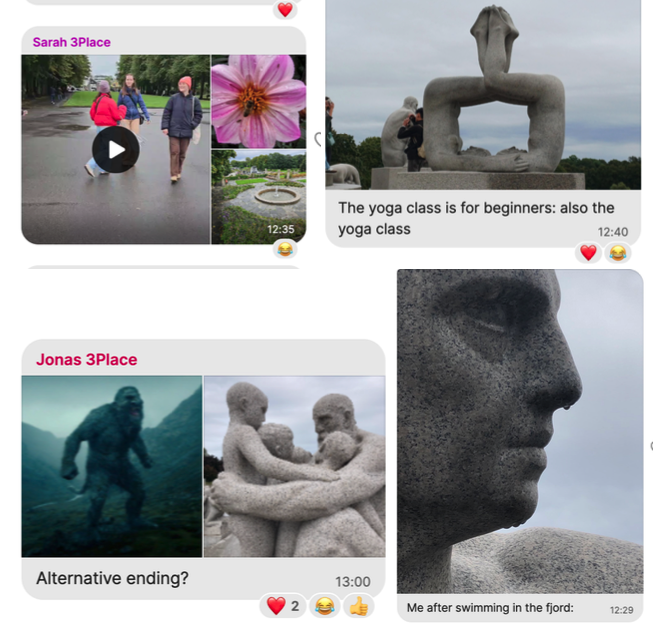
In this workshop, NSKB tested a messaging-based format using the Signal app, chosen due to youth protection considerations. As the digital workshop #6 from JES, we wanted to try a digital messaging group as a way into the topic, instead of Zoom. The digital channel functioned alongside Camp Physical, the last of the three Camps, allowing participants to share observations, images and reflections in real time.
Rather than scheduled meetings, the workshop unfolded over several days, with participants contributing during walks, city exploration and shared activities. The most active day was the Sunday, as we used the platform in context of our individual walks around city spaces.
Content and activities
Participants were encouraged to:
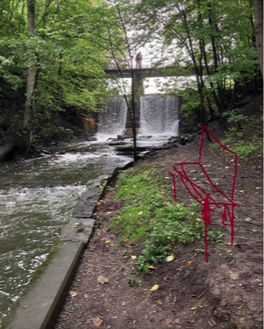
- share images of places and details that caught their attention
- reflect on urban spaces, comfort, accessibility and belonging
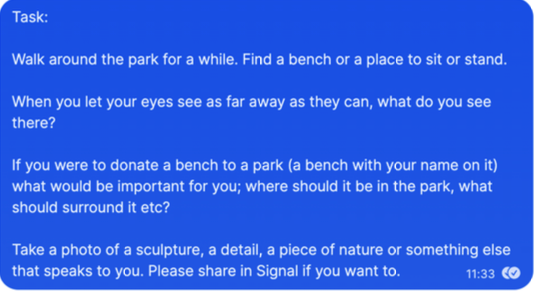
- respond to prompts connected to parks, public spaces and movement through the city
On the final day, digital sharing was combined with physical group activities, creating a layered experience where reflection moved fluidly between online and offline space.

Reflection
This format proved effective as a low-intensity, low-threshold method for engagement. While not suitable as a standalone format, it worked well as an addition to physical encounters. The experience highlighted the importance of carefully balancing digital demands and confirmed the potential of short, informal digital interactions when used consciously.
One of the things we experienced during the later digital workshops was that, even when the content was strong, it became increasingly difficult to engage young people in online Zoom meetings. While this was partly due to their busy schedules, it also felt as though repeated online meetings caused a sense of wear and tear within the group. This was one of the reasons we chose to experiment with merging digital elements into physical encounters.
We found that this approach worked very well, but it also made clear that the amount of digital activity requested needs to be considered carefully. Short, immediate digital interactions can be useful when applied thoughtfully. We are glad to have tested this format, as it appears to be a method we could confidently use in future projects.
Key learnings across the digital workshops
Across the workshops, several insights emerged:
- Digital formats work best when they are simple, focused and clearly structured
- Shared creation is more engaging than discussion-based formats
- Digital spaces can function as third places when they build on existing trust
- Messaging platforms can support reflection without replacing physical encounters
The digital workshops contributed to the project’s broader exploration of how involvement can be sustained over time and across geography — not through constant activity, but through thoughtful, well-timed digital presence.